
Case Study
SCR Retrofit of SCONOX System
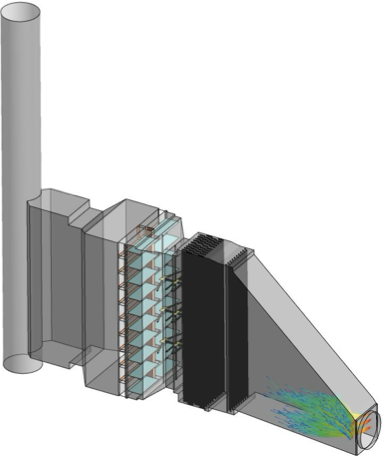
OPERATOR/LOCATION: Electric Utility in Northern California, USA
EXECUTED: 2018
Challenge:
The customer had 2 existing SCONOX systems used for NOx and CO reduction that had high operation and maintenance costs. The customer needed a safe, reliable, low maintenance alternative to replace the SCONOX system, while continuing to meet stringent emissions requirements.
SYSTEM PARAMETERS:
- Two 46 MW Natural Gas Fired Siemens SGT-800
- Flue Gas Flow; 1,000,000+ lb/hr
- Exhaust Temp at Catalyst; 575 F
- Emissions Limits; NOx <2 PPM, CO <4ppm, NH3 Slip <5 PPM
Solution:
Retrofit design, engineering, CFD modeling and hardware supply of two urea based storage and injection systems for 2 GT’s. Direct in-duct urea injection in the exhaust duct wall to reduce NOx across the catalyst. Dual Function Catalyst used to reduce both NOx and CO with a single catalyst layer. The catalyst modules were custom designed and fabricated to fit into the existing catalyst bays. A new perforated plate was designed to maximize ammonia/NOx distribution, improving efficiency.
RESULTS:
Removal of the SCONOX system with the associated blowers, hydrogen reformer, and higher pressure drop catalyst reduced electrical consumption, eliminated natural gas and steam consumption needed for hydrogen formation and increased turbine performance by decreasing pressure drop. Total Gas Turbine output increased by 5.5 MW or 5% of total plant output.
- Reduced Maintenance Outage Time: The system design allows for minimal maintenance throughout the life of the system when compared to the previous SCONOX system.
- Safe Operation: Urea is a non-hazardous SCR reagent, so storage and handling hazards are eliminated compared to ammonia-based systems. Direct injection eliminates any chance of ammonia formation outside of the exhaust duct.
- Minimized Install Outage Time: The system design allowed for the new SCR/CO catalyst to be located within the same bays as the previous SCONOX catalyst, thus reducing construction cost and outage length.
- Ultra-Low Emissions: NOx was reduced to <2 ppm and CO reduced to <1ppm, with <5 ppm NH3 Slip